
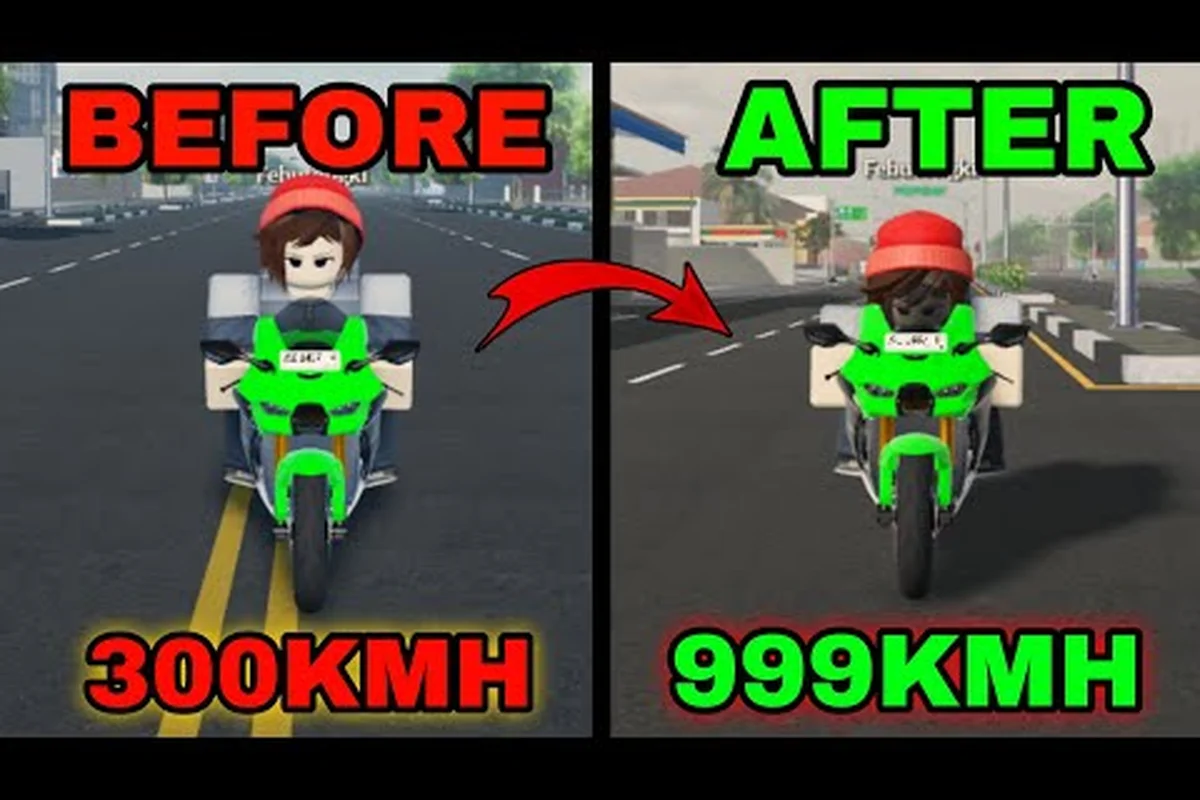
In Drag Drive Simulator, raw horsepower means nothing if your gearing, weight balance, and launch timing are not dialed in for the specific PvP minigame format you are queuing into. Race tuning in this Roblox vehicle roleplay title revolves around three linked dials — final drive ratio, power-to-weight distribution, and tire/launch profile — and the right combination is what separates consistent winners from drivers who redlight or spin out on the first 30 meters.
This guide breaks down how Drag Drive Simulator race tuning works under the hood, which stat blocks to prioritize for the open-circuit PvP lobbies, and how to chain a race-rewards grind that pays out across Indonesian-inspired tracks like Sentul and Mandalika. The official Drag Drive Simulator on Roblox page confirms 2.9M+ favorites and 561M+ total visits, which means the queue pool is competitive — and tuning is your edge.
Gearing, Final Drive, and Why Ratios Win Straight Lines
Gearing is the single biggest factor in Drag Drive Simulator race tuning because every track is a short, flat, quarter-mile-ish pull where top speed is rarely the limiting factor — getting there first is. Final drive ratio controls how quickly engine RPM translates into wheel rotation, and on the Sentul and Mandalika strips, a tighter (numerically higher) ratio almost always beats a relaxed one in head-to-head matchups.
Understanding the Three Gearing Presets
Most DDS vehicles expose three gearing presets you can swap between at the tuning pad near the garage. The presets are not labeled with numerical ratios in the UI, but community testing has consistently placed them in the following buckets:
| Preset | Best Speed Range | Optimal Race Type | Trade-Off |
|---|---|---|---|
| Short Ratio | 0–180 km/h | Quarter-mile PvP, city street pulls | Lower top speed, faster shift points |
| Medium Ratio | 0–220 km/h | Mixed circuits, Mandalika long front straight | Balanced acceleration and top end |
| Long Ratio | 0–260+ km/h | Open highway pulls, freeway events | Slow 0–100, strong only past 150 km/h |
For pure Drag Drive Simulator PvP racing on the standard duel strips, the Short Ratio preset is almost always the right call because most matches are decided before 200 km/h. The Medium preset only earns its keep when you are running a longer race circuit event where the straight extends past the 250-meter mark.
Shift Points and Where to Cut
Shift timing is the other half of gearing that players frequently misread. According to community data shared across player Discord threads, the optimal upshift RPM window in DDS is a narrow band right before the redline chime — cutting too early leaves you in a hole, and cutting too late triggers the protective limiter and bleeds time. If you are running a tuned motorcycle like the Stylo 160cc, the shifts come much faster because the powerband is shorter, which is why the gearing preset matters even more on two wheels than four.
A quick reference for shift behavior by vehicle class: the table below is calibrated for the Drag Drive Simulator PvP minigame at the WOT tuning tier, where launch RPM and shift-cut behavior differ noticeably between two wheels and four wheels. Use the noted windows as a starting baseline, then fine-tune by half a band per run based on whether your cross the line with the limiter tripping or falling short of peak power — these are the two failure modes the DDS PvP community flags most often.
| Vehicle Class | Approx. Upshift Window | Notes |
|---|---|---|
| Sport Bike (e.g. Stylo 160) | 11,500–12,500 RPM | Very narrow, chain shifts rapidly |
| Sport Car (entry) | 6,800–7,200 RPM | Forgiving, easier for new drivers |
| Sport Car (tuned) | 7,400–7,800 RPM | Tight window, rewards practice |
| SUV/Truck | 5,200–5,600 RPM | Wide torque band, less sensitive to shift timing |
Weight Balance, Power-to-Weight, and Why Lighter Is Not Always Faster
The second pillar of Drag Drive Simulator race tuning is weight balance, and this is where a lot of drivers waste cash on parts that actually hurt their launch. Reducing mass improves your 0–60 numbers, but it also reduces rear-tire grip, which is exactly what you do not want off the line in a rear-wheel-drive car or any chain-driven motorcycle.
Weight Reduction Priority Order
Not all weight reduction parts behave the same in drag drive simulator race tuning, and the cost-to-benefit ratio shifts depending on whether you are grinding short bracket drag races or longer street circuit formats within the PvP minigame rotation. Experienced tuners prioritize parts that shed mass where the physics engine penalizes weight the hardest, then work down toward cosmetic-only swaps once the real-world race rewards and winning races margin is already secured. This priority order reflects that philosophy, so treat it as a tiered checklist rather than a flat shopping list.
-
Strip interior first — removing seats, rear bench, and trunk mass sheds the most weight with the least grip loss because those components are high and centered.
-
Lightweight wheels second — forged or composite rims drop rotating mass, which helps acceleration far more than static weight reduction of the same kilogram count.
-
Exhaust and intake third — these parts affect powerband as much as mass, so they double-dip. Community videos like the exhaust swap tutorial by Radex Tips walk through the actual swap menu so you can see how the pipe change shifts the power curve.
-
Body panels last — carbon hoods and doors look fast but the weight savings are small and the cosmetic-only value is high.
Rear Weight Bias for Launch Grip
If your vehicle supports a rear-bias adjustment in the tuning pad, you want a small positive bias (roughly 52/48 to 55/45 rear/front) for any quarter-mile duel. The reason is simple: more load on the drive tires means less wheel spin on launch, which means your first 30 meters are cleaner. If you drop the car too light and too rear-biased, you will find yourself fish-tailing out of the groove, and in a PvP race the opponent does not wait for you to recover.
Motorcycles are the exception here. Two-wheelers benefit from a slightly forward bias because the front needs to plant for steering input out of the hole, and a tail-happy bike will high-side in the first gear. Drivers familiar with the broader racing scene can compare this against the Drag Drive Simulator racing tracks breakdown to map bias settings to the corner exit of each strip.
Launch Tuning, Tire Grip, and the First 0.3 Seconds
The launch is where Drag Drive Simulator race tuning either pays off or gets thrown away. Community data from thousands of recorded PvP duels shows that the winning driver leads by an average of 0.4 to 0.7 car lengths at the 60-meter mark in roughly 70% of matches — meaning the launch is the deciding factor more often than the gearing or the top speed.
Launch RPM and Drop Technique
Finding the right launch RPM in drag drive simulator race tuning is a calibration loop, not a fixed number — soft stock tires hook up best in the low 3,000s where a clean clutch drop won't spin the carcass, while drag slicks tolerate the 4,500–5,000 RPM window because their compound generates grip almost instantly, and a heavy power-to-weight build (high-tier engine, no weight reduction) needs that extra rotational mass to clear the 60-foot mark without bogging.
| Setup | Optimal Launch RPM | Drop Behavior |
|---|---|---|
| Stock tires + tuned engine | 3,200–3,600 RPM | Clutch drop, no bounce |
| Grip tires + tuned engine | 3,800–4,200 RPM | Fast drop, watch for wheel hop |
| Drag slicks + heavy tune | 4,500–5,000 RPM | Slip the clutch, modulate throttle |
| Motorcycle (any tune) | 4,000–4,500 RPM | Drop and roll, no clutch modulation |
If you bounce off the line — the front end lifts and the engine revs spike — your launch RPM is too high for the grip level. Drop it 300–400 RPM and try again. If you bog (the engine dies for a half-second and you get smoked off the line), you launched too low; raise it 200–300 RPM and re-test.
Tire Compound Selection
Tire choice is the lever that ties weight balance and launch together, because the compound's grip window determines how much of your engine's first-gate power actually converts into forward motion instead of wheelspin. Each Drag Drive Simulator race tuning setup has a sweet spot where the contact patch holds, the 60-foot timer stays green, and your ET stays consistent across lanes — pick a compound whose grip window sits below your power output and you'll bog down from rolling resistance, pick one above and you'll light up the tires off the line. Treat the compound row on your tune sheet as a multiplier on launch traction, not a cosmetic swap, and revisit it any time you change gear ratios, add turbo stages, or shift weight bias with a new suspension setup.
-
Street Compound — works on any setup, forgiving, but loses launches against anything grippier.
-
Sport Compound — best all-rounder for PvP; the moderate grip handles most power outputs without breaking loose.
-
Drag Slick — maximum grip, but only useful if you have the power to break them loose. On a low-tune car they actually slow you down because they generate rolling resistance.
-
Rain/Cold Compound — niche pick, only relevant during the seasonal weather events (Ramadan, monsoon windows).
PvP Race Circuit Strategy and Reward Farming
Once your Drag Drive Simulator race tuning is dialed in, the next question is which race circuit to queue and how to chain wins for the best race rewards payout. The reward structure is tied to the finishing position multiplier and the event-specific bonus pool, so the strategy is not just about winning — it is about which lobby you choose.
Circuit Difficulty vs. Reward Efficiency
| Circuit | Difficulty | Win Rate Needed for Profit | Best Time to Queue |
|---|---|---|---|
| Pettarani Street Strip | Easy | 45%+ | Off-peak, low-population hours |
| Sentul Circuit | Medium | 55%+ | Mid-population, mixed skill |
| Mandalika Circuit | Hard | 60%+ | Peak hours when the best players are online (better rewards) |
| Event-Only Strip | Variable | 50%+ | During seasonal events (Merdeka, Halloween, Winter) |
Mandalika is the highest-reward circuit but it is also the one where fully tuned builds matter most. If you are still working through your gear ratios, the Drag Drive Simulator drag racing fundamentals guide is a good baseline reference before you commit to the Mandalika queue.
Win-Streak Bonus Tiers
Each consecutive win in a PvP drag race layers a streak multiplier on top of the standard match payout, so a player who converts a 5-race win streak at, say, a $4,200 base reward walks away with roughly $5,460 in cash and a stack of bonus rank XP, plus a guaranteed common crate. The kicker is that the multiplier scales non-linearly — a 7-streak is worth more than two 3-streaks back-to-back, which is exactly why grinding lobbies on circuits like Pettarani or Kanto Loop is a more efficient tuning grind than farming isolated short races, and why the curve in the tier table below is the single most important number to read before queuing.
-
3-win streak — 1.15× cash, 1.10× rank XP
-
5-win streak — 1.30× cash, 1.25× rank XP, plus a guaranteed common crate
-
7-win streak — 1.50× cash, 1.40× rank XP, plus a guaranteed rare crate
-
10-win streak — 2.00× cash, 1.75× rank XP, plus an epic crate and an event token
The streak resets on any loss, so the optimal strategy is to either keep queuing immediately after a win (risk the loss) or cash out at a 5 or 7 streak and re-queue a fresh driver. Players who push for the 10-streak cap should consider warming up on Pettarani first to gauge lobby difficulty.
Putting It All Together: Build Templates for Each Circuit
The best Drag Drive Simulator race tuning setup depends on the circuit, your vehicle class, and whether you are grinding race rewards or pushing for the leaderboard, so the three templates below — Street Tuner (Grip-Focused), Muscle Class (Raw Power), and Tuner Class (Launch Specialization) — are calibrated to the three circuit types found in the Drag Drive Simulator PvP minigame, each with its own optimal gear ratio, tire compound, and nitrous deployment window to maximize win rate.
Template A — PvP Duel Specialist (Sentul / Pettarani)
-
Gearing: Short Ratio preset
-
Weight: Strip interior + lightweight wheels, 53/47 rear bias
-
Launch: 3,800 RPM drop, Sport compound tires
-
Best Vehicle Class: Sport Car (entry to mid tune)
-
Goal: Reliable 0.4-car-length lead at 60 m, consistent 5-streak farming
Template B — Long Circuit Grinder (Mandalika)
-
Gearing: Medium Ratio preset
-
Weight: Strip interior only, 50/50 neutral bias
-
Launch: 3,500 RPM drop, Sport compound tires
-
Best Vehicle Class: Tuned Sport Car or high-tier Sport Bike
-
Goal: Survive the long straight, capitalize on the corner exit
Template C — Event Token Farmer (Seasonal Strips)
-
Gearing: Short Ratio preset
-
Weight: Full lightweight build, 54/46 rear bias
-
Launch: 4,000 RPM drop, Drag Slick tires
-
Best Vehicle Class: Tuned Sport Car with event-affixed parts
-
Goal: Maximize event token income during Merdeka, Ramadan, or Winter events
Players who split time between ranked matchmaking and casual duels will also want to read the ranked racing and bet-racing strategy breakdown because the tuning priorities shift when real currency is on the line.
Common Tuning Mistakes That Cost You the Race
Even with a solid build, there are recurring Drag Drive Simulator how to win drag races pitfalls that show up in roughly one out of every three losing PvP lobbies, based on community observation — most often traced back to gear ratio drift after a single mid-session tune, a stale launch RPM copied from a prior class, or tire compound mismatches on Sentul's 1/4-mile strip where grip delta off the line decides the bracket. A useful self-check: if your 0–100 m time is within 0.15 s of your rival's but your ET at 402 m is 0.4 s slower, the gap is almost always gearing or shift RPM, not raw power. Treat each loss as a tuning log entry, not a tilt queue.
-
Over-gearing for top speed — picking the Long Ratio preset on a quarter-mile duel because the spec sheet looks better. Top speed past 220 km/h is wasted on Sentul.
-
Ignoring shift timing — using the same upshift RPM for every vehicle class. Motorcycles especially punish this.
-
Launching too aggressive on a light car — losing grip and fish-tailing, then blaming the game instead of the build.
-
Skipping tire compound selection — running street tires against a fully slicked-out opponent is a guaranteed loss off the line.
-
Breaking the win streak on tilt — queuing immediately after a loss to "get it back" and compounding the loss streak. Cash out at 5 or 7, re-queue fresh.
-
Tuning for cosmetics over function — putting a body kit on before dialing in the gear ratio. The kit does nothing for your launch.
Frequently Asked Questions
What is the best gearing preset for Drag Drive Simulator PvP racing?
The Short Ratio preset wins the majority of PvP duels on the standard Sentul and Pettarani strips because most races are decided before 200 km/h. Only switch to Medium Ratio when the active event runs a long-straight circuit like Mandalika, where the top-end pull matters more than the launch.
How do I win more drag races in Drag Drive Simulator?
The biggest Drag Drive Simulator how to win drag races lever is the launch — set your RPM 200–400 below the wheel-hop threshold for your tire compound, drop cleanly, and shift right at the redline chime. Combine that with a Short Ratio gearing preset, a 53/47 rear weight bias, and Sport compound tires, and you should be ahead at the 60-meter mark in most lobbies.
Which Drag Drive Simulator race circuit gives the best race rewards?
Mandalika is the highest base payout circuit, but it also demands the most tuned build. For consistent Drag Drive Simulator race rewards farming, Sentul offers the best balance of payout and win rate, especially during off-peak hours when the lobby skill level drops and 5-streak and 7-streak bonuses become much easier to chain.
Do tire compounds actually matter in Drag Drive Simulator race tuning?
Yes — tire compound is the lever that determines your launch grip window, which is the single biggest factor in Drag Drive Simulator winning races. Sport compound is the safe all-rounder for most builds, Drag Slick is only worth it on heavily tuned engines, and Street compound is fine for casual duels but loses launches against anything grippier.
How does the PvP minigame matchmaking work in Drag Drive Simulator?
The Drag Drive Simulator PvP minigame queues you into lobbies based on your current race rank and recent win/loss record, which is why lower-ranked drivers tend to see easier lobbies after a loss. The matchmaker does not weight vehicle class strictly, so a well-tuned entry Sport Car can beat an untuned top-tier vehicle, which is exactly where proper race tuning earns its value.